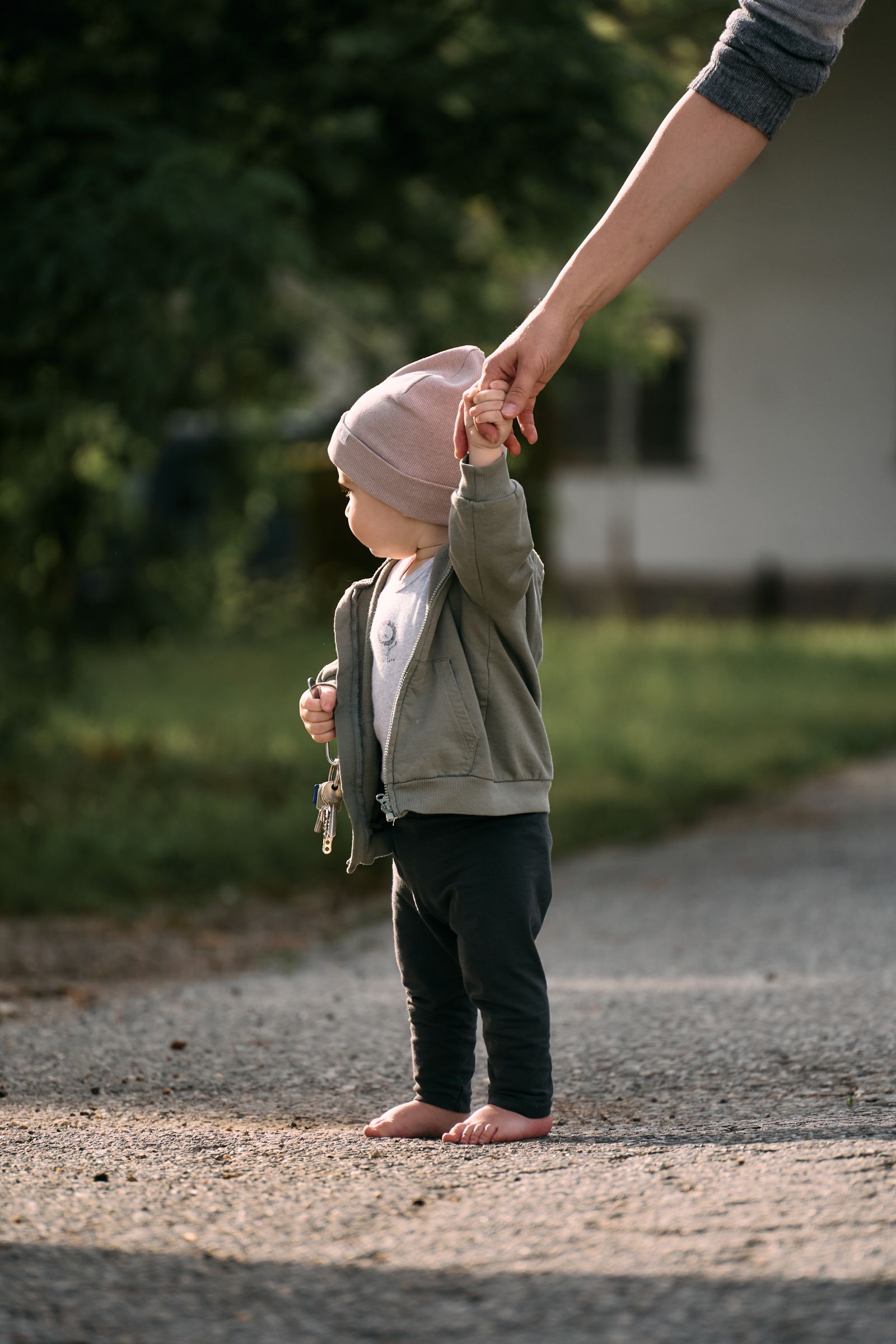
Raising an Anxious Child: What Actually Helps
Childhood anxiety is more common than most parents realize. The good news is that anxiety is one of the most treatable mental health conditions in children.
Feedlittle Contributors
Editorial Team
Childhood anxiety is more common than most parents realize. The CDC estimates that about 7 percent of children aged 3 to 17 have been diagnosed with an anxiety disorder, and many more experience significant anxiety without a formal diagnosis. The good news is that anxiety is one of the most treatable mental health conditions in children, and parents play a central role in helping.1
What Anxiety Looks Like in Children
Children rarely say "I am anxious." Instead, they complain of stomachaches and headaches. They avoid situations. They become clingy or irritable. They have trouble sleeping. A child who seems oppositional may actually be anxious. Understanding this can change the entire dynamic, from "why won't you behave" to "what are you worried about."
The Trap of Accommodation
The most natural parental response to an anxious child is to remove the source of anxiety. If a child is afraid of dogs, you cross the street. If a child is afraid of school, you let them stay home. This is called accommodation, and while it provides short-term relief, it actually makes anxiety worse over time. The child learns that the world is dangerous and that they cannot handle it. The goal, difficult as it is, is to help the child face their fears gradually, with support.3
What Actually Works
The gold standard treatment for childhood anxiety is cognitive behavioral therapy (CBT), specifically a technique called gradual exposure. The child, with the help of a therapist and the support of parents, faces their fears in small, manageable steps. A child afraid of dogs might start by looking at pictures of dogs, then watching dogs from a distance, then standing near a calm dog. Each step builds confidence. A 2015 meta-analysis in the Journal of Clinical Child and Adolescent Psychology found that CBT is effective for about 60 percent of children with anxiety disorders.2
When to Seek Professional Help
Not all childhood anxiety requires professional intervention. Some anxiety is developmentally normal: separation anxiety in toddlers, fear of the dark in preschoolers, social anxiety in early adolescence. These are signs of a developing brain learning to navigate a complex world. Professional help is warranted when anxiety interferes with daily life, when it prevents a child from attending school, participating in activities, making friends, or sleeping, or when it causes significant distress to the child or the family.
A good first step is a conversation with your pediatrician, who can screen for anxiety and refer you to a child psychologist or therapist. Look for a therapist who specializes in cognitive behavioral therapy with children, and who involves parents in the treatment. The most effective programs, like the Coping Cat and FRIENDS curricula, teach children specific skills for managing anxiety and give parents specific tools for supporting the process.4
The Parent's Own Anxiety
There is a genetic component to anxiety, but the environmental component is at least as strong. Anxious parents are more likely to have anxious children, partly through genetics and partly through modeling. Children learn how to respond to the world by watching their parents. If a parent avoids situations, expresses excessive worry, or reacts to uncertainty with visible distress, the child learns that the world is a dangerous place and that avoidance is the appropriate response.
This is not about blame. It is about awareness. If you are an anxious parent, the most powerful thing you can do for your anxious child is to work on your own anxiety. Modeling brave behavior, narrating your coping strategies, and showing your child that you can feel anxious and still do the scary thing is more effective than any instruction you could give. The message is not "do not be afraid." The message is "I am afraid too, and I am going to do it anyway."
Building Brave Children
The goal is not to eliminate anxiety from your child's life. Anxiety is a normal human emotion, and a child who never feels anxious is a child who never takes risks. The goal is to help your child develop the skills to manage anxiety so that it does not manage them. That means teaching them to identify the feeling, to challenge the catastrophic thoughts that fuel it, and to take action even when the feeling is present.
Praise brave behavior, not the absence of anxiety. "I noticed you were nervous about going to the party, and you went anyway. That took real courage." This teaches your child that courage is not the absence of fear but the willingness to act in spite of it. That lesson, learned in childhood, will serve them for the rest of their life.
The Bottom Line
Childhood anxiety is common, it is real, and it is treatable. The most important things a parent can do are to recognize the signs, avoid the accommodation trap, and help the child face their fears gradually. When the anxiety is more than you can manage at home, professional help is available and effective. The goal is not a child who never worries. The goal is a child who can worry and still live fully. That child is built, one brave step at a time, by parents who are brave enough to let them try.
Sources & further reading
- 1.CDC, "Children's Mental Health: Anxiety" data.
- 2.Silverman, W. et al. (2008). Evidence-based psychosocial treatments for childhood anxiety. Journal of Clinical Child and Adolescent Psychology.
- 3.Lebowitz, E. et al. (2013). Treating childhood anxiety with parental accommodation. Journal of the American Academy of Child and Adolescent Psychiatry.
- 4.Kendall, P. (2012). The Coping Cat treatment for childhood anxiety. Cognitive and Behavioral Practice.
Written by
Feedlittle Contributors
Editorial Team
Feedlittle Contributors contributes to Feedlittle Journal on topics related to mental health. Every piece is grounded in peer-reviewed research and reviewed by our editorial team.
Keep Reading
More in Mental Health
The Science of Toddler Tantrums
A two-year-old in full meltdown is not misbehaving. They are, in a very real neurological sense, overwhelmed. Understanding that changes everything.

Postpartum Depression: Recognizing the Signs
Postpartum depression affects an estimated one in seven new mothers. It is the most common complication of childbirth, and it is treatable.
The Feedlittle Newsletter
Make your inbox a little wiser.
One carefully researched article every week, on feeding, sleep, development, and the science of raising small humans. No spam, no hype, just evidence you can use.
Join 12,000+ parents. Unsubscribe anytime.