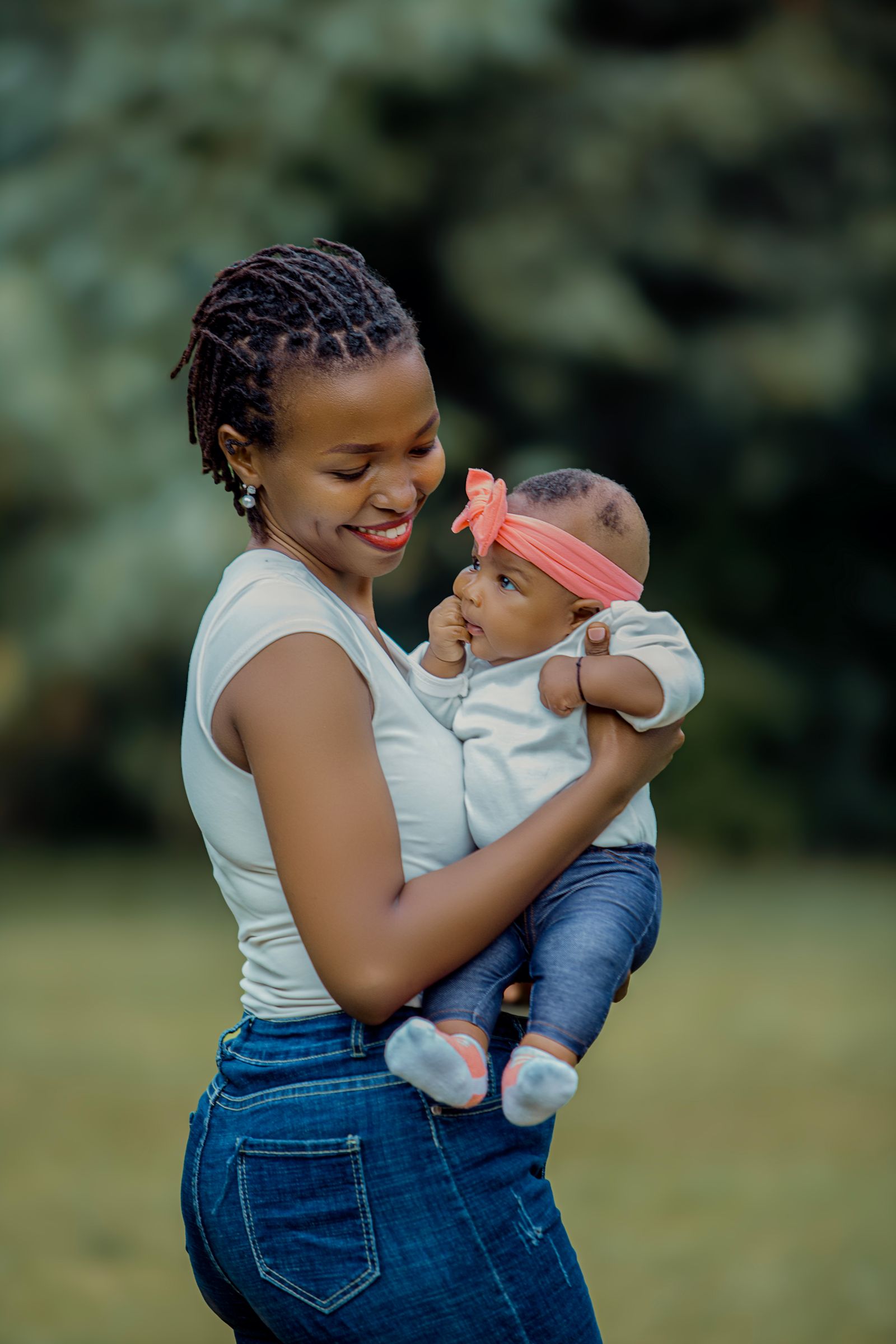
The Bilingual Baby: Raising Kids With Two Languages
A persistent myth says that raising a child with two languages delays their development. The research says the opposite.
Feedlittle Contributors
Editorial Team
For decades, well-meaning pediatricians advised immigrant parents to drop their home language and speak only English to their children. The advice was based on a misunderstanding of early bilingualism. The research, now substantial, points firmly the other way.
The Myth of the Delay
It is true that bilingual children, on average, have smaller vocabularies in each of their languages than monolingual children have in theirs, when measured in early childhood. This is not a delay. It is arithmetic. If a child knows 1,000 words split across two languages and another knows 1,000 in one, the monolingual child will score higher on a single-language test. When researchers measure total vocabulary across both languages, bilingual children are right on track.
Long-term studies consistently find that bilingual children catch up to, and in some measures exceed, their monolingual peers by school age. The early "delay" is a measurement artifact, not a developmental problem.
The Cognitive Benefits
Research by Patricia Kuhl at the University of Washington has shown that bilingual babies, by about 10 to 12 months, are tracking the sounds of both their languages, even though they cannot speak either. Their brains are doing extra work, and that work appears to pay off. Bilingual children, on average, show stronger executive function skills, the abilities to switch attention, inhibit impulses, and hold information in working memory, than monolingual children, though the effect sizes are modest and the subject of ongoing debate.1
There is also evidence that lifelong bilingualism may delay the onset of dementia by several years, a finding that has held up across multiple studies. The "cognitive reserve" built by managing two languages appears to protect the aging brain.2
How Bilingual Acquisition Actually Works
Children do not get confused by two languages. From birth, their brains are tracking the statistical patterns of each language separately. By a few months of age, they can already distinguish the rhythm and sounds of their two languages. By their first birthday, they are beginning to assign words to the right language.
Mixing languages in the early years is normal and is not a sign of confusion. It is a sign that the child is drawing on all their resources to communicate. Mixing decreases naturally as the child gets older and the languages become more differentiated.
Practical Approaches
The most common strategy is "one parent, one language," where each parent speaks a different language to the child. This works well but is not the only option. Other families use "minority language at home," where the whole family speaks the home language and the child learns the community language at school. Still others use "time and place," where the language is tied to a specific context, like weekends or bedtime stories.
The single most important factor is the amount of exposure to each language. Research suggests that a child needs about 25 to 30% of their waking hours in a language to develop active competence in it. Below that, they may understand the language but not speak it fluently. Above it, they are likely to become active bilinguals.3
If you have a home language, the research is clear: keep it. You are giving your child a gift that will pay dividends for the rest of their life, and you are not delaying their English. You are building a brain that can hold two worlds at once.
Common Challenges and Solutions
Raising a bilingual child is not without challenges, and knowing what to expect can help you navigate them. The most common challenge is the "minority language rebellion," which typically occurs around age three or four, when the child realizes that the minority language is not spoken by peers or media. They may start refusing to speak it, even if they understand it perfectly. This is normal and does not mean the child is losing the language. The solution is to stay consistent, find community resources (playgroups, story times, video calls with family), and make the minority language a source of joy rather than obligation.
Another common challenge is the concern that mixing languages will confuse the child. As noted earlier, mixing is normal and temporary. The child is not confused; they are resourceful. The best response is to model the target language naturally, without correcting the mixing. Over time, the languages will separate. A third challenge is limited exposure, particularly if only one parent speaks the minority language. The 25 to 30 percent threshold is a useful guide: if you can get the child above that level of exposure through a combination of parent speech, media, and community, active bilingualism is achievable.
The Lifelong Gift
The benefits of bilingualism extend far beyond childhood. Bilingual adults have access to two cultures, two literatures, and two ways of seeing the world. In a globalized economy, bilingualism is a professional asset that grows more valuable every year. And the cognitive benefits, the stronger executive function, the enhanced attentional control, the cognitive reserve that may delay dementia, persist throughout life.
But the most important gift may be the one that is hardest to measure: the connection to family and heritage. A child who speaks the language of their grandparents can communicate with them directly, without translation. A child who reads in two languages has access to twice the literature, twice the poetry, twice the stories. The gift of bilingualism is not just cognitive or professional. It is relational and cultural, and it connects a child to a world that is wider and richer than any single language can contain.
Sources & further reading
- 1.Kuhl, P. (2010). Brain mechanisms in early language acquisition. Neuron.
- 2.Bialystok, E. (2017). The bilingual adaptation. Trends in Cognitive Sciences.
- 3.Pearson, B. (2008). Raising a Bilingual Child.
- 4.De Houwer, A. (2015). Harmonious bilingual development. International Journal of Bilingual Education and Bilingualism.
Written by
Feedlittle Contributors
Editorial Team
Feedlittle Contributors contributes to Feedlittle Journal on topics related to learning. Every piece is grounded in peer-reviewed research and reviewed by our editorial team.
Keep Reading
More in Learning
The Truth About Screen Time for Toddlers
The headlines are scary. The research is more nuanced. Here is what the evidence actually shows about screens and the under-three set.
Reading to Babies: The Word Gap, Explained
The "30 million word gap" became one of the most cited statistics in education. The real story is more interesting, and more hopeful, than the number.
The Montessori Method: What the Research Says
The Montessori method is one of the most influential educational philosophies in the world. But does it actually work? The research, while not unanimous, is largely positive.
The Feedlittle Newsletter
Make your inbox a little wiser.
One carefully researched article every week, on feeding, sleep, development, and the science of raising small humans. No spam, no hype, just evidence you can use.
Join 12,000+ parents. Unsubscribe anytime.